The Craft
From earth to fire,
from water to air
Follow the eau-de-vie's journey through the four elements — to a cask-strength armagnac, pure, with no water and no coloring.
Earth · The terroir
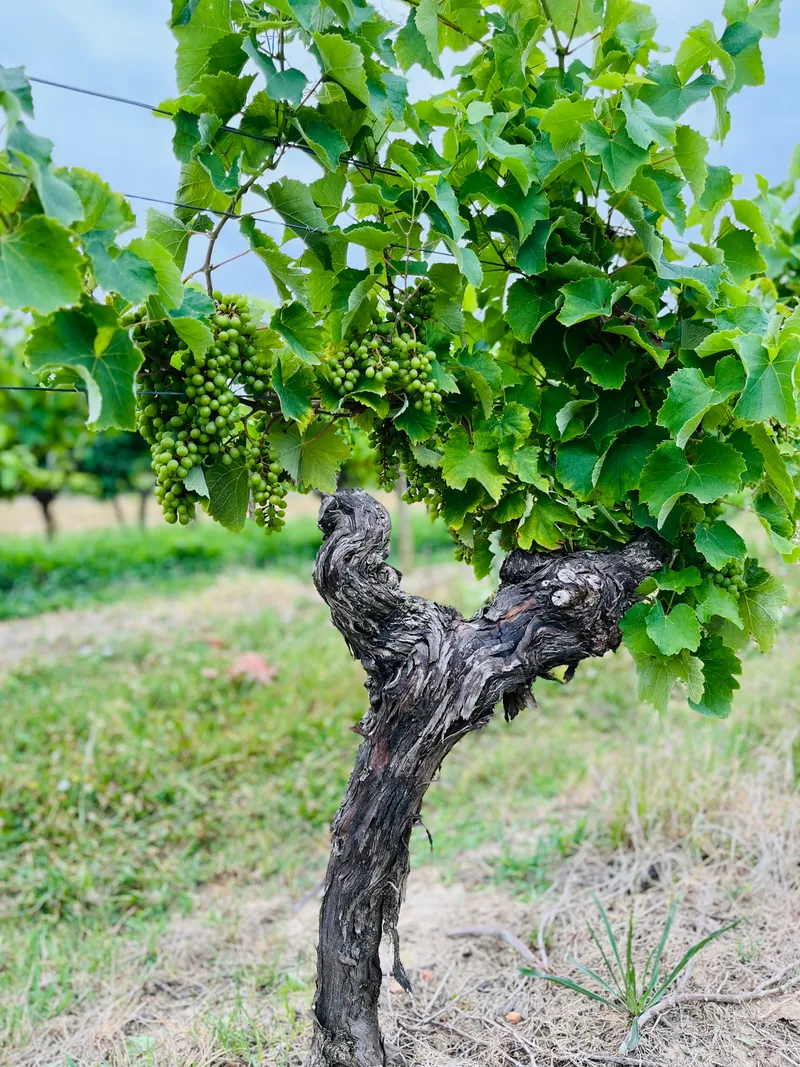
Gascony soil and its grape varieties
It all starts with the earth: the clay-sand soils and boulbène of the Gascogne, swept by a temperate oceanic climate. This is where Armagnac's grape varieties take root.
Ugni Blanc, Baco, Folle Blanche, Colombard — each contributes its share of finesse, acidity and body to the future blend.
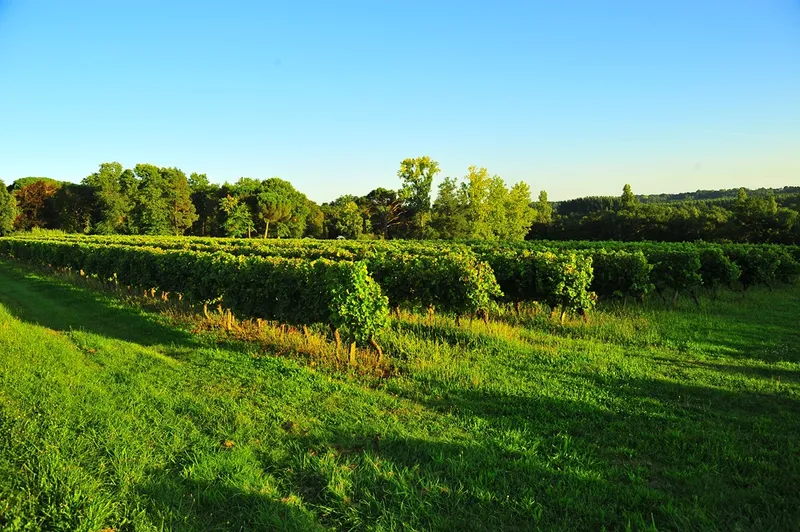
Water · The wine
From grape to wine, then to eau-de-vie
The grapes yield a dry, acidic, low-alcohol white wine — vinified without sulphur, as the coming distillation demands.
Fresh off the still, the armagnac is still as clear as water. Its whole future rests on this initial transparency.
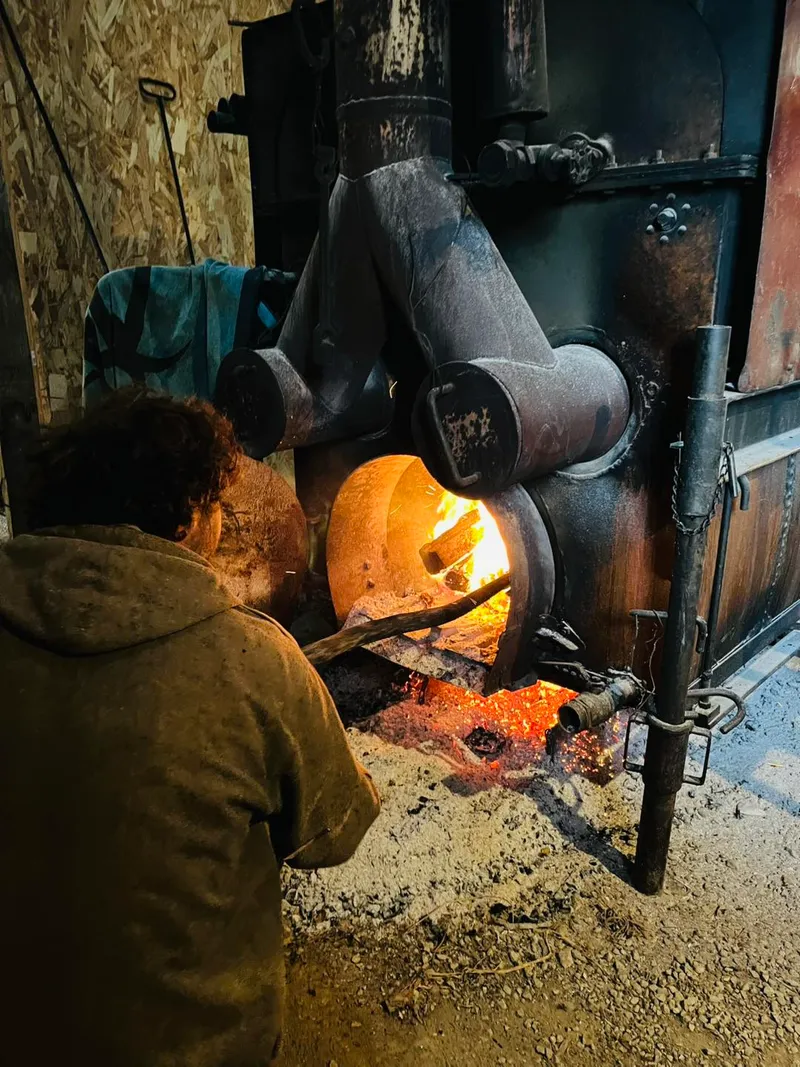
Fire · Distillation
The still and the toasting of oak
The Armagnac continuous still concentrates the aromas in a single, patient pass. Fire draws out the soul of the wine.
The same fire shapes the barrels: toasting the oak releases the tannins and toasted notes that will nourish the eau-de-vie.
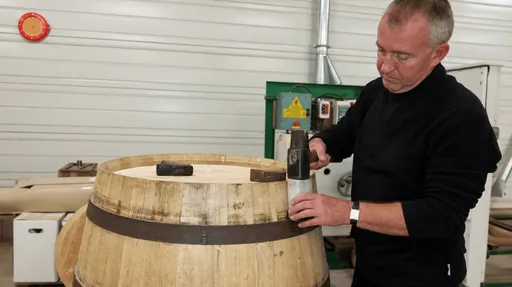
Gilles Bartholomo
Master Cooper · Tonnellerie Bartholomo
Oak casks from the Gascon forest, with every new cask coming exclusively from our local cooper, Tonnellerie Bartholomo. Based in Le Frêche since 1982, Gilles Bartholomo is the region's last master cooper: he shapes each cask by traditional craftsmanship, from wood naturally dried for 30 to 36 months to the toasting that reveals its aromas.
Air · Ageing
The cellar, time, and the angels' share
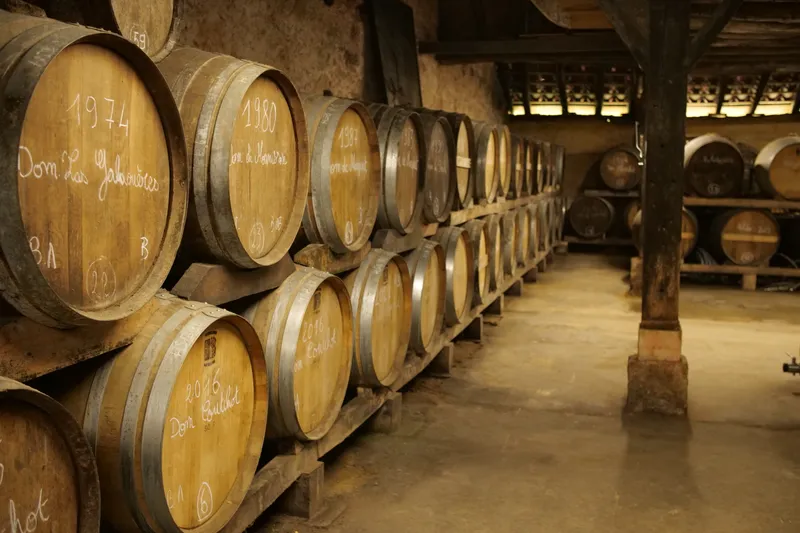
In the damp half-light of the cellar, the eau-de-vie breathes through the oak. Air carries off a share of the volume each year: the angels' share.
Over decades, the color deepens to amber and the aromas meld — without ever a drop of water or coloring added.
The result
Cask strength, and nothing else
But what, exactly, is cask strength?
A world gone industrial
In France, wine and spirits are often spoken of in the same breath — yet they are two different worlds: one rooted in an agricultural tradition, the other in an industrial one, or at best an artisanal one. Distillation changes everything: from that step on, a spirit is no longer an agricultural product but an industrial one, and industrial practice has gradually taken over — proof lowered with added water, color and body built with caramel or wood extracts, sweetened with sugar, flavored directly or indirectly. The vast majority of the world’s spirits bear about as much resemblance to a raw agricultural product as a chicken nugget does to a farmyard chicken.
Armagnac, an agricultural exception
Very few spirits claim a genuine appellation of origin — Scotch or Japanese whisky, for instance, is distilled from grain bought on the world market. Armagnac starts from wine made within the AOC Armagnac zone, and it must be distilled and aged within that same zone: a product that stays agricultural from the grape to the bottle.
Our commitments at LATERRADE
- No cutting: our eaux-de-vie are bottled straight from the cask, with nothing added.
- A proof that drops naturally, through ageing alone.
- A color that owes everything to the casks — never to added caramel or wood extract.
- No filtering, no sweetening.
This is what we call Brut de Fût — cask strength.
Back to home